• Skip to primary navigation
  • Skip to main content
  • Skip to primary sidebar

Frugal Gardening

Simple ways to save money while you garden

  • About
  • Contact Us
  • Garden Frugally
  • Buy These
  • Privacy Policy
  • Navigation Menu: Social Icons

    • Facebook
    • Pinterest
    • Twitter

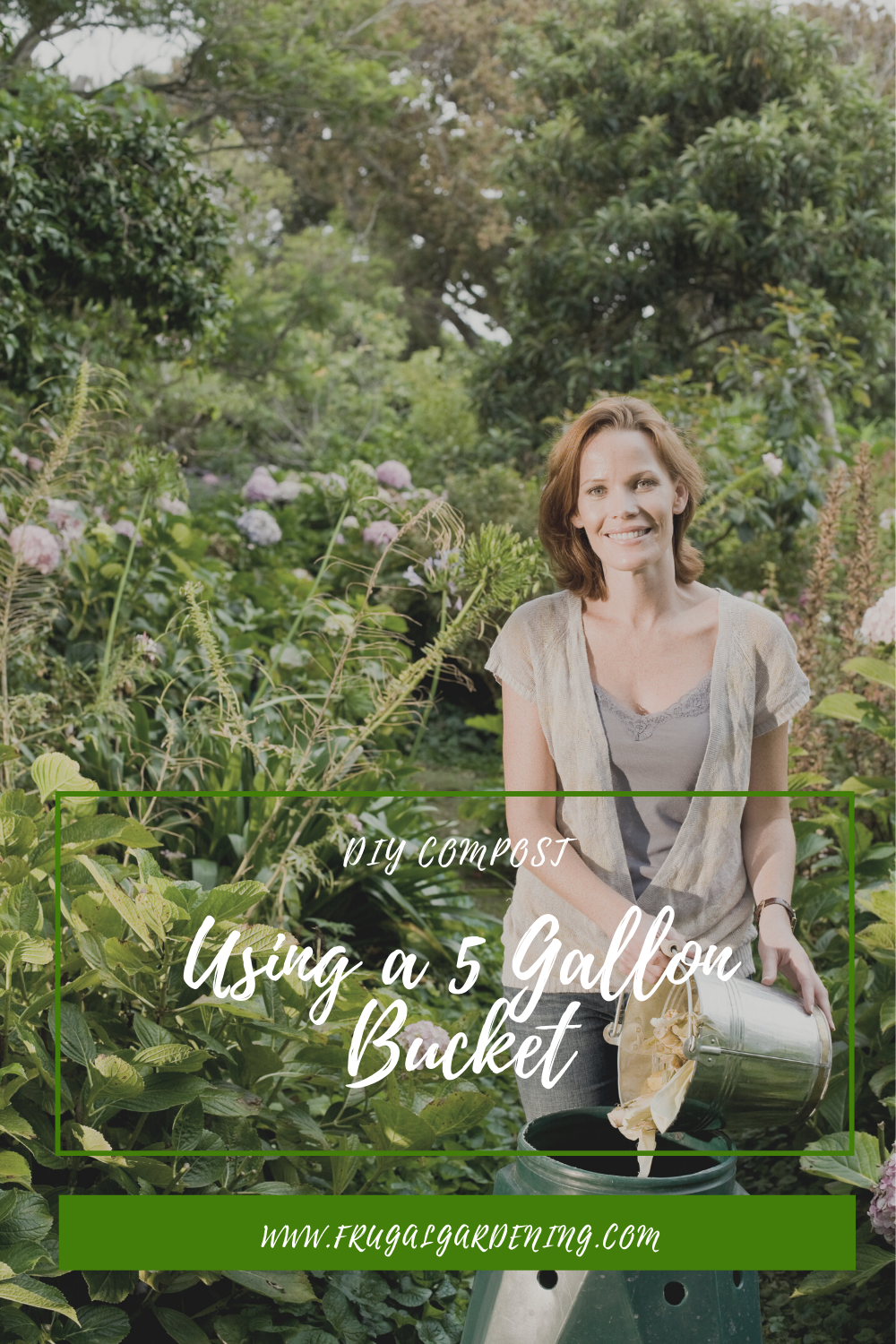
DIY Compost Using a 5 Gallon Bucket

September 14, 2020 by Steph Coelho Leave a Comment


DIY Compost Using a 5 Gallon Bucket

Compost is an essential medium for any gardener. It enriches the soil, provides nutrients to plants, and helps improve soil composition. It’s also easy to make compost using simple items you probably have lying around your home. Here’s how to make a 5-gallon bucket compost bin to get yourself some free compost.

Tools

I covered a similar topic earlier this year when I blogged about creating a low-cost worm compost bin. If you’re not a fan of worms and want to avoid dealing directly with creepy crawlies, here’s an alternative method for creating your own compost.

Often, people use storebought bins to compost produce scraps and yard refuse. You can also build a bin from scratch. If you’re not very handy and don’t have room for a full-size compost bin, you’re in luck! A bucket compost system works in a pinch and is great for people who garden on their balconies or porch.

What do you need?

  • A 5-gallon bucket. That’s pretty much it. If you don’t have one, you can probably grab one at your local hardware store for cheap. But ask around, someone you know might have one they don’t need.
  • A drill. This is to drill holes in the bucket. If you don’t have power tools, use a hammer and nail.

Assembling Your DIY Compost Bin

Take your 5-gallon compost bucket and drill holes in the bottom and the lid. You need to let the compost aerate to prevent mold growth.

Use something at the bottom of your bin to prevent the drainage holes from getting lodged with waste. You can use sticks, rocks, whatever works.

The next step? Filling up the bucket!

You can fill your 5-gallon DIY compost bucket with fruit and veggie scraps, grass clippings, and other compost-friendly materials. Not sure what you can put in? Here’s a handy guide.

It’s best to keep your bin outside to prevent odors from stinking up your home. Roll the bin around occasionally to ensure the materials mix together. If you choose to line the bottom of your bin with rocks, it may be tougher to mix the contents, though.

Always make sure the lid is tightly affixed to the bucket to keep pests from breaking in and feasting on your rotting materials.

How Long Will it Take?

It can take a while for matter in your compost bucket to decompose fully. The rate of decomposition depends on the weather, where you live, and what you stuff inside. Avoid filling the bin up too much. If there’s not enough air, it’ll take longer for stuff to break down.

Help your 5-gallon bucket compost bin contents along by putting your bin in a spot with lots of sunlight.

Need a visual guide to get your 5-gallon compost bucket ready? Check out this YouTube tutorial:

Photograph of Steph Coelho.
Steph Coelho

Steph Coelho is a freelance writer gardening in zone 5b. She is a certified Square Foot Gardener and has taught various garden-related workshops. When she’s not digging in the dirt or writing, she’s cooking up fresh produce, running, or listening to her favorite podcasts.

Filed Under: composting, frugality Tagged With: compost, composting, DIY

Previous Post: « Seeding Square Review: An Essential Tool for the Square Foot Gardener
Next Post: Free Funeral Home Plants »

Reader Interactions

Leave a Reply Cancel reply

Your email address will not be published. Required fields are marked *

Primary Sidebar

Struggling to get your garden off the ground? Put those days behind you with our special starter kit – perfect for thrifty green thumbs everywhere. Get growing and add a splash of color today!

Popular Posts

  • usda free seeds websiteHow To Get Free Seeds From The Government by Amanda Blankenship Seeds might seem like a small expense, but any seasoned…
  • Enviro Ice On PlantsShould I Use Enviro Ice On My Plants? by Kathryn Vercillo Every week, I receive food from Hungryroot. It's a great…
  • is shredded paper good for the gardenFrom Trash to Treasure: Transform Shredded Paper Into Garden Gold by Amanda Blankenship Should you use shredded paper as garden mulch? It might…
  • Enviro IceWhat Happens to Plants If You Use Enviro Ice on Them? by Amanda Blankenship About a year ago, I wrote our first article about…
Which Plant Pairings Naturally Reduce Pests and Improve Yields

Which Plant Pairings Naturally Reduce Pests and Improve Yields

Gardens buzz with life, but not all visitors are welcome. Some nibble leaves, suck juices, and generally wreak havoc, turning a lush patch of greens into a battlefield. Instead of reaching for chemical sprays, gardeners can harness the natural power of plant partnerships. Certain plant duos can repel pests, attract beneficial insects, and even boost…

Read More

6 Low-Cost Ways to Improve Heavy Clay Soil for Better Plant Growth

6 Low-Cost Ways to Improve Heavy Clay Soil for Better Plant Growth

Gardening in heavy clay soil feels like trying to run a marathon in concrete boots. It’s thick, sticky, and unforgiving, holding water like it’s training for a swamp competition. Plants can struggle, roots get suffocated, and the frustration mounts as every shovel feels heavier than the last. But here’s the truth: clay soil isn’t your…

Read More

The Unexpected Insect That Devours New Leaves Before You Notice Damage

The Unexpected Insect That Devours New Leaves Before You Notice Damage

The first clue doesn’t always look dramatic. A fresh flush of green appears on a plant, full of promise and energy, and then something feels off before anything looks truly wrong. Leaves curl just slightly, growth slows down without explanation, and suddenly that vibrant burst of life loses its edge. No holes, no obvious chew…

Read More

How to Build a Simple Worm Farm Using Everyday Household Materials

How to Build a Simple Worm Farm Using Everyday Household Materials

An ordinary plastic bin can turn into a thriving ecosystem that quietly transforms scraps into garden gold. That transformation feels almost magical, yet it runs on a simple, natural process powered by worms doing what worms do best. The idea of building a worm farm might sound like something reserved for serious gardeners, but it…

Read More

  • About
  • Contact Us
  • Garden Frugally
  • Buy These
  • Privacy Policy
  • Navigation Menu: Social Icons

    • Facebook
    • Pinterest
    • Twitter
  • Facebook
  • Pinterest
  • Twitter

Copyright © 2026 · Foodie Pro & The Genesis Framework