• Skip to primary navigation
  • Skip to main content
  • Skip to primary sidebar

Frugal Gardening

Simple ways to save money while you garden

  • About
  • Contact Us
  • Garden Frugally
  • Buy These
  • Our Editorial Commitment
  • Navigation Menu: Social Icons

    • Facebook
    • Pinterest
    • Twitter

4 Advantages of Pruning Plant Roots

January 25, 2021 by Steph Coelho Leave a Comment


4 Advantages of Pruning Plant Roots

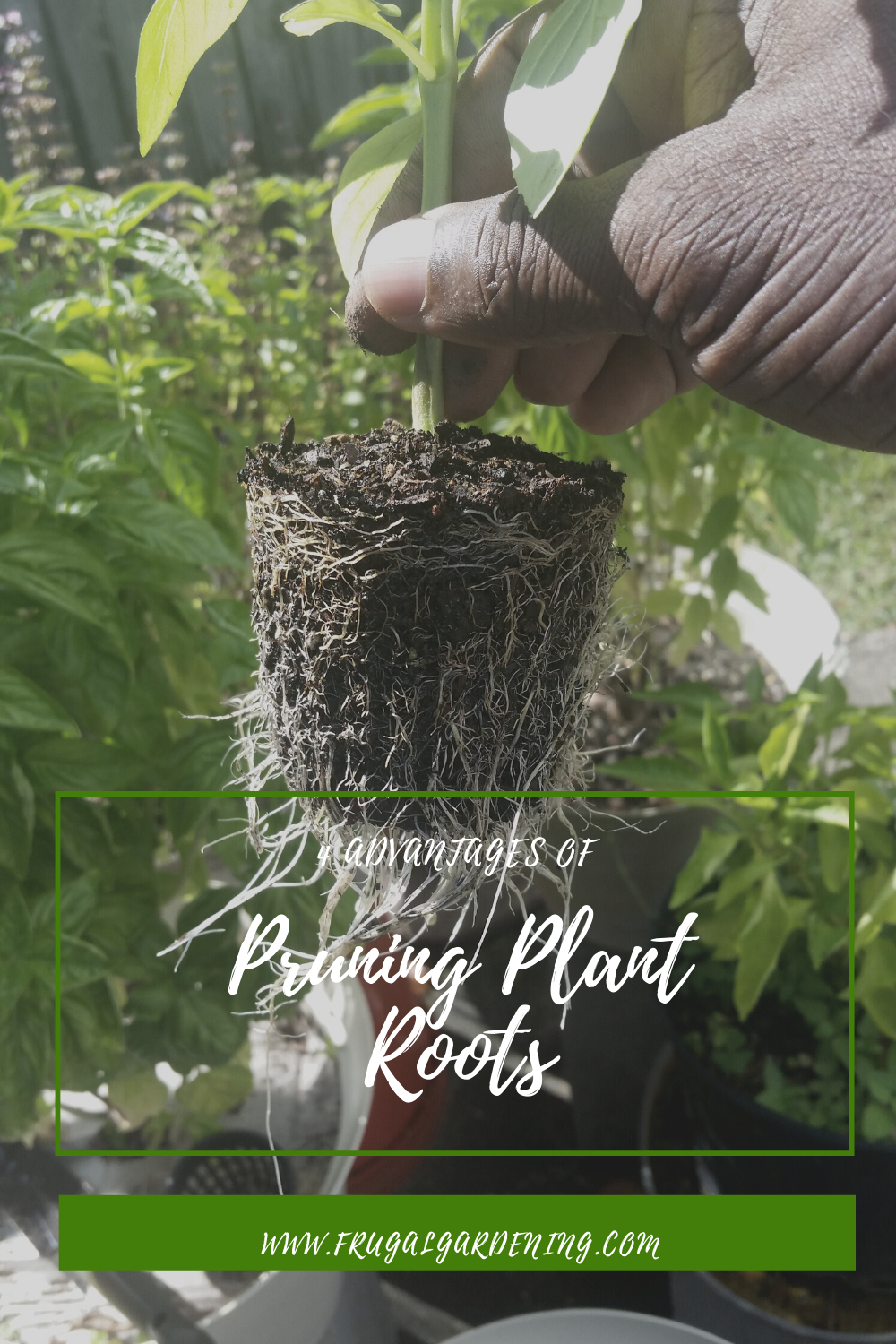
You’ve heard of pruning branches, but what about pruning plant roots? Roots aren’t something we think about very often. Mainly because they’re buried under the earth. Out of sight. Out of mind. However, paying attention to your plant’s roots can be an essential part of raising healthy houseplants. 

Here’s why you might consider pruning plant roots. Below, you’ll also find a helpful video for guidance on how to prune plant roots.

Improve root growth

Young plants can sometimes fail to produce healthy, abundant root systems. When this happens, pruning the roots before transplanting may help encourage more vigorous growth.

Prevent or reverse root binding

If you’ve ever repotted a plant or left a seedling too long in its pot, you may have noticed that its root system begins to circle the bottom of the container. If this happens, it means the plant has become root-bound. Without anywhere else to expand, the roots become a ragged, dense mess. Trimming the roots can help encourage new root growth and improve the overall health of your plant.

An alternative to trimming is to use breathable fabric pots. Obviously, this isn’t a great option for indoor plants. For outdoor plants, thought, fabric pots allow for air pruning. Because the fabric is breathable, it will enable the roots to breathe, preventing plants from becoming root-bound altogether.

Increases nutrient absorption

By pruning plant roots, you encourage nutrient absorption. The new root fibers help increase a plant’s nutrient uptake from the soil. If you have a root-bound plant, it can’t take up nutrients efficiently because it’s incapable of growing a lot of new, healthy roots.

Slows down growth

Abundant growth is great, but a plant that grows too rapidly will quickly need to be repotted again and again. By pruning roots, you slow down overall growth keeping the plant the right size for its current pot for a little while longer.

Get more plants

You’ll also need to prune roots if you want to divide plants. To divide plants, you’ll need to separate the roots, clip them, and trim them to encourage new growth.

How to prune

The ideal way to prune a plant is to lightly trim part of its root system. Taking off too much can have the opposite effect and potentially damage the plant.

Photograph of Steph Coelho.
Steph Coelho

Steph Coelho is a freelance writer gardening in zone 5b. She is a certified Square Foot Gardener and has taught various garden-related workshops. When she’s not digging in the dirt or writing, she’s cooking up fresh produce, running, or listening to her favorite podcasts.

Filed Under: container gardening, gardening methods, houseplants, plant growth, transplanting Tagged With: pruning plant roots, pruning roots, root bound, trimming roots

Previous Post: « 5 Reasons to Start a Garden This Spring
Next Post: 5 Houseplants That Won’t Waste Your Money »

Reader Interactions

Leave a Reply Cancel reply

Your email address will not be published. Required fields are marked *

Primary Sidebar

Struggling to get your garden off the ground? Put those days behind you with our special starter kit – perfect for thrifty green thumbs everywhere. Get growing and add a splash of color today!

Popular Posts

  • usda free seeds websiteHow To Get Free Seeds From The Government by Amanda Blankenship Seeds might seem like a small expense, but any seasoned…
  • Enviro Ice On PlantsShould I Use Enviro Ice On My Plants? by Kathryn Vercillo Every week, I receive food from Hungryroot. It's a great…
  • is shredded paper good for the gardenFrom Trash to Treasure: Transform Shredded Paper Into Garden Gold by Amanda Blankenship Should you use shredded paper as garden mulch? It might…
  • Enviro IceWhat Happens to Plants If You Use Enviro Ice on Them? by Amanda Blankenship About a year ago, I wrote our first article about…
unsolicited seeds in the mail

Received Seeds You Never Ordered? USDA Says Don’t Put Them in the Ground

Finding an unexpected packet of seeds in your mailbox might seem like a gardener’s version of free money. Before you scatter those mystery seeds into a flower bed or tuck them into a pot, however, the U.S. Department of Agriculture wants you to stop. The USDA Animal and Plant Health Inspection Service says non-compliant seeds,…

Read More

home compost problems

7 Garden Problems You Don’t Want Surviving in Next Year’s Compost

Turning this year’s garden waste into next year’s free soil amendment is one of the best money-saving tricks a gardener can use. But tossing everything you pull, prune, or rake into the pile can also turn home compost problems into next season’s garden problems. It’s generally a good idea for home gardeners to leave out…

Read More

houseplant pest inspection

This Tiny Pest Can Hitchhike Indoors on Your Houseplants This Fall

If your houseplants spent summer soaking up sunshine on the porch or patio, you may be preparing to bring them inside as fall nights get colder. Unfortunately, a plant isn’t always the only thing making the trip through your front door. Spider mites can hide on foliage, and they’re so tiny that you may notice…

Read More

reusing potting soil

Stop Buying Potting Soil Every Year — Here’s What Can Actually Be Reused

Dumping every container at the end of the gardening season can feel painfully wasteful, especially when you’ve filled several large planters with expensive potting mix. The good news is that gardeners don’t necessarily need to start with completely fresh bags every spring. The University of Illinois says soilless potting media can be reused when the…

Read More

  • About
  • Contact Us
  • Garden Frugally
  • Buy These
  • Our Editorial Commitment
  • Navigation Menu: Social Icons

    • Facebook
    • Pinterest
    • Twitter
  • Facebook
  • Pinterest
  • Twitter

Copyright © 2026 · Foodie Pro & The Genesis Framework