• Skip to primary navigation
  • Skip to main content
  • Skip to primary sidebar

Frugal Gardening

Simple ways to save money while you garden

  • About
  • Contact Us
  • Garden Frugally
  • Buy These
  • Privacy Policy
  • Navigation Menu: Social Icons

    • Facebook
    • Pinterest
    • Twitter

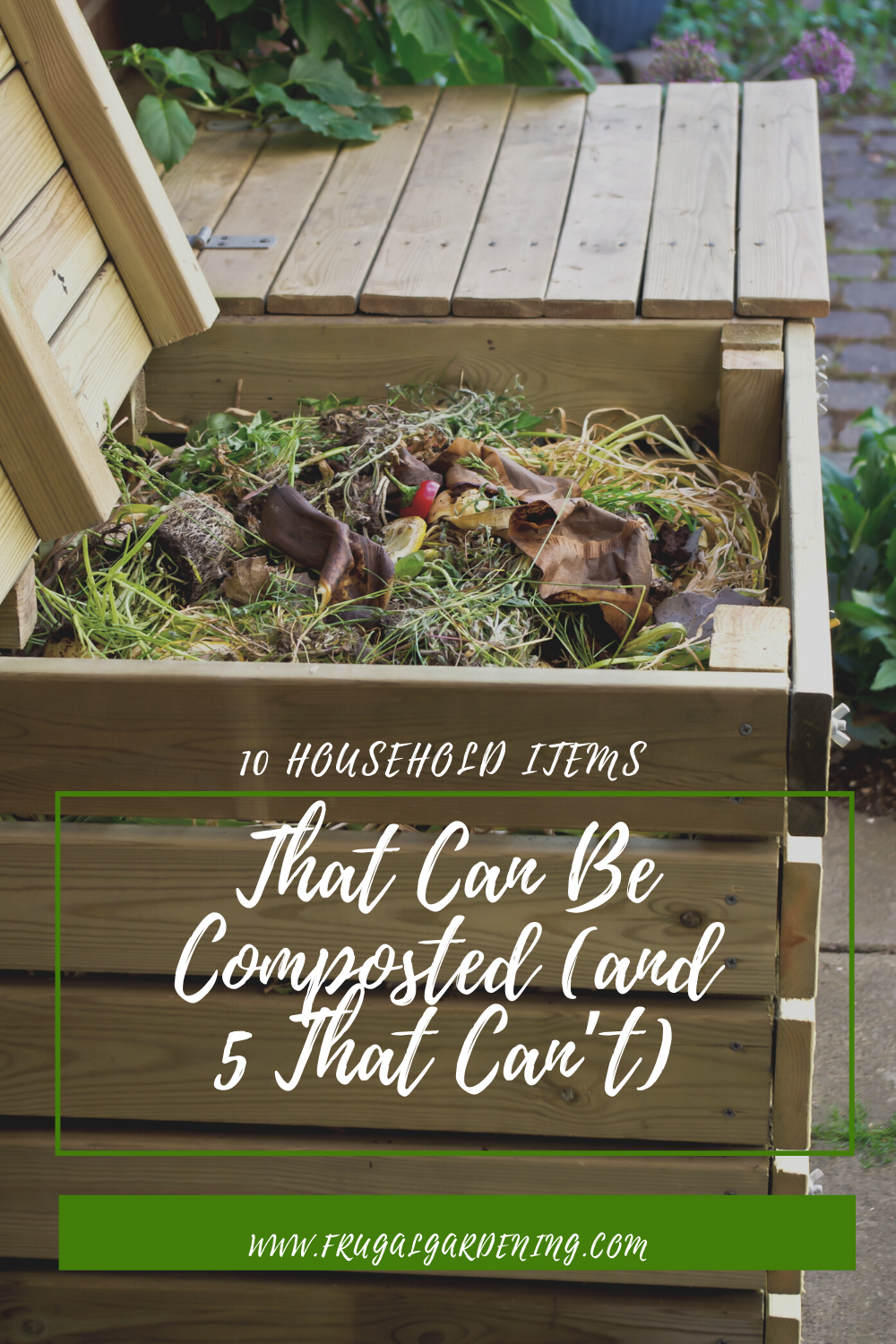
10 Household Items That Can Be Composted (and 5 That Can’t)

May 3, 2021 by Steph Coelho Leave a Comment


10 Household Items That Can Be Composted (and 5 That Can’t)

Composting household items is the most efficient way to create nutrient gold for your garden. If you can use up what you have on hand, you can save money and reduce the amount of waste you create.

So what can you toss into the compost bin? Here are ten household items you can compost.

Composting Household Items

There’s one big rule when composting household items: Make sure you cut them into tiny pieces!

Chucking big pieces of anything into your compost bin is an easy way to fail. Composting takes time. The bigger the items inside your bin, the longer it’ll take for them to break down.

  • Leaf and grass clippings. When your yard needs a good sprucing up, collect the dead plant matter and toss it into your compost bin.
  • Fruit and vegetable peels. You can also throw in the cores of fruits like apples and peaches. Got rotting fruit at the back of your produce drawer? You can toss that into the compost, too.
  • Parchment paper. This is also fine to put into the compost bin. Just make sure it doesn’t have a waxy coating.
  • Houseplant detritus. Frequent pruning helps keep houseplants looking neat and tidy. Don’t throw away all those dead leaves, though. Pop them into your compost bin. As long as the plant matter isn’t diseased, you can compost dead plant matter right at home. If you’re dealing with diseased plants, throw those leaves and roots into the commercial composting bin—if your city provides one.

Composting Other Household Items

  • Teabags. Not all tea bags are compostable. Check the label to make sure the bag will degrade in your compost bin. If in doubt, tear them open and compost the innards.
  • Coffee grounds. Regardless of the kind of coffee you love to drink, you’re bound to create a lot of coffee ground waste. It can be annoying to head to the compost bin every time you brew coffee, though. Instead, grab a glass container and fill it with used grounds. When it’s full, toss them into the compost.
  • Paper plates. As long as they don’t have a waxy coating, paper plates can go into the compost.
  • Bamboo skewers and chopsticks. Again, as long as they aren’t coated in some type of film, these are also fair game for the compost. I also like using these as supports for my tomato, pepper, and eggplant seedlings.
  • Cardboard. Don’t expect to chuck in giant pieces of cardboard and successfully compost it. Cut it into small pieces before tossing it into your bin.
  • Paper bags. The same goes for paper bags. Make sure you’re adding small pieces to your bin.

Household Items You Can’t Compost

Composting household items is a great way to reduce your waste production. However, you can’t compost everything. Here are some things you should avoid tossing into your compost bin:

  • Eggshells. People will recommend composting eggshells until they’re blue in the face, but the truth is that they decompose extremely slowly.
  • Meat and bones. Save these for the commercial compost bin. Your at-home bin doesn’t produce enough heat to kill off potentially dangerous pathogens.
  • Anything with a waxy or glossy coating. A plastic coating means the item won’t compost, and it may even contain harmful toxins.
  • Big branches and large plants. It sounds like a good idea, but…it isn’t. Anything big is going to take way too much time to decompose.
  • Cooked food. You run the risk of inviting pests into or around your compost bin by adding cooked food to the mix.

Read More

Yes, you can garden for free

Ten ways to get free plants for your garden

How to get free plants

Photograph of Steph Coelho.
Steph Coelho

Steph Coelho is a freelance writer gardening in zone 5b. She is a certified Square Foot Gardener and has taught various garden-related workshops. When she’s not digging in the dirt or writing, she’s cooking up fresh produce, running, or listening to her favorite podcasts.

Filed Under: composting Tagged With: compost, compost bin, composter, composting, composting household items, kitchen scraps, plant scraps, waste

Previous Post: « Brice Capital Helped Me Launch My Produce Business
Next Post: 7 Plants You Can Direct Seed »

Reader Interactions

Leave a Reply Cancel reply

Your email address will not be published. Required fields are marked *

Primary Sidebar

Struggling to get your garden off the ground? Put those days behind you with our special starter kit – perfect for thrifty green thumbs everywhere. Get growing and add a splash of color today!

Popular Posts

  • usda free seeds websiteHow To Get Free Seeds From The Government by Amanda Blankenship Seeds might seem like a small expense, but any seasoned…
  • Enviro Ice On PlantsShould I Use Enviro Ice On My Plants? by Kathryn Vercillo Every week, I receive food from Hungryroot. It's a great…
  • is shredded paper good for the gardenFrom Trash to Treasure: Transform Shredded Paper Into Garden Gold by Amanda Blankenship Should you use shredded paper as garden mulch? It might…
  • Enviro IceWhat Happens to Plants If You Use Enviro Ice on Them? by Amanda Blankenship About a year ago, I wrote our first article about…
Affordable Ways to Create Pollinator Habitats That Attract Bees and Butterflies

Affordable Ways to Create Pollinator Habitats That Attract Bees and Butterflies

A yard without pollinators feels like a party with no music. No hum, no flutter, no life dancing between petals. Bees and butterflies don’t just decorate outdoor spaces; they power entire ecosystems, carrying pollen from plant to plant and keeping food systems alive. Without them, gardens stall, fruits shrink, and biodiversity slips away faster than…

Read More

5 Tool-Cleaning Hacks That Extend Equipment Life and Save Money

5 Tool-Cleaning Hacks That Extend Equipment Life and Save Money

A tool that works like new feels powerful, reliable, and ready for anything. A tool clogged with grime, rust, and buildup feels like a liability waiting to slow everything down. That difference doesn’t come from luck or expensive upgrades. It comes from simple habits that keep equipment in peak condition and stop wear before it…

Read More

What Powdery Mildew Looks Like and How to Stop It Early

What Powdery Mildew Looks Like and How to Stop It Early

An innocent-looking white dust can signal serious trouble. That soft, powdery coating creeping across leaves doesn’t just sit there looking harmless—it actively weakens plants, slows growth, and ruins entire gardens when it goes unchecked. Powdery mildew doesn’t wait for an invitation, and it doesn’t need perfect conditions to take hold, which makes it one of…

Read More

How Leaf Litter Can Improve Soil Health and Reduce Fertilizer Costs

How Leaf Litter Can Improve Soil Health and Reduce Fertilizer Costs

An empty yard stacked with fallen leaves doesn’t signal a mess—it signals opportunity. Those crunchy layers underfoot hold more power than any bag of store-bought fertilizer stacked in a garden center aisle. Leaves carry nutrients, structure, and life, all bundled into one overlooked seasonal gift. Instead of treating them like waste, smart gardeners treat them…

Read More

  • About
  • Contact Us
  • Garden Frugally
  • Buy These
  • Privacy Policy
  • Navigation Menu: Social Icons

    • Facebook
    • Pinterest
    • Twitter
  • Facebook
  • Pinterest
  • Twitter

Copyright © 2026 · Foodie Pro & The Genesis Framework